The Oak That Never Shed Its Leaves
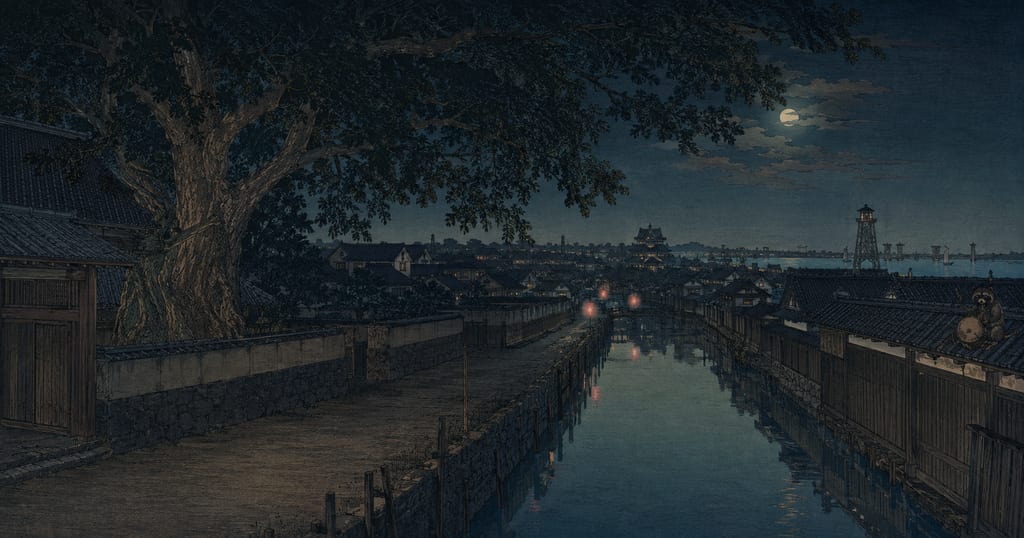
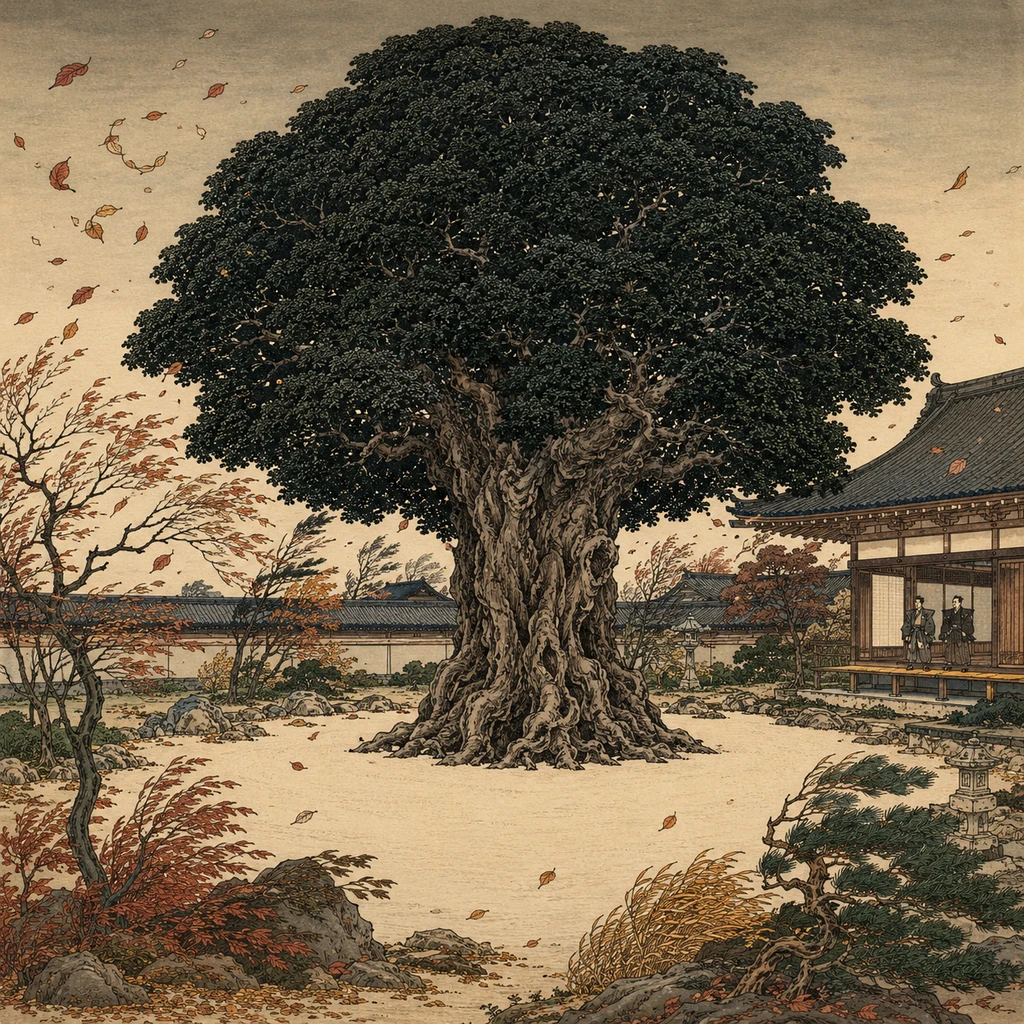
In the Edo period, a venerable chinquapin/oak tree in the garden of the Matsuura clan’s upper residence at Hirado Shinden, Honjo, was said never to drop a single leaf throughout the year. Counted among the “Seven Wonders of Honjo,” it was viewed as ominous because even evergreens shed leaves. Household members kept their distance, feeling it foretold misfortune. Accounts differ on the exact site and the identity of the actual tree, and details remain uncertain.
Read more旧安田庭園のすぐ西、墨田区横網一丁目の一角に、かつて平戸新田藩松浦家の上屋敷があった。庭には立派な椎の古木が一本あり、常緑樹であるにもかかわらず四季を通じて一枚も葉を落とさなかったと噂された ── 本所七不思議の一つ落葉なき椎である。屋敷の主はやがてこの木を気味悪がり、屋敷を使わなくなったと伝わる。本所横網はその「葉の落ちない椎」が立っていた現場であり、本所一帯に散らばる怪異群を読み解く起点にふさわしい土地である。
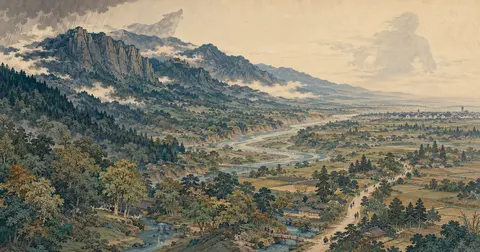
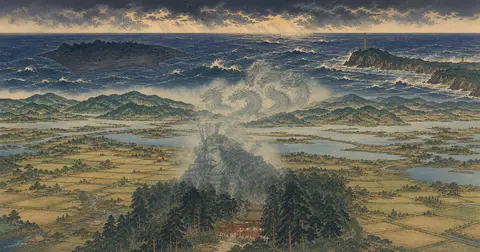
本所(現・墨田区南部)は、明暦の大火(1657)の後に幕府が竪川・大横川・北十間川などの堀割を開削して急速に町立てした、江戸でも新しい市街である。湿地を埋めた低地に武家屋敷と町屋が混在し、その間を割下水(わりげすい)と呼ばれる排水路が東西に貫いた。淀んで暗く、夜になれば人気の絶える堀端と水路 ── この都市装置そのものが、自然の山野ではなく町の隅に巣くう新種の怪異を生んだ。本記事ではこの「本所七不思議」を、現場の町名と初出文献に即して一つずつ辿る。江戸の妖怪文化全体の見取り図は東京都の妖怪事典に譲り、ここでは本所という一地域の怪異に踏み込む。
本所という土地 ── 堀と割下水の新開地
本所七不思議を理解するには、まずこの土地の成り立ちを押さえる必要がある。本所は隅田川の東岸、もとは葦の茂る低湿地であった。明暦の大火で江戸市街の大半を焼いた幕府は、防火と都市拡張のため隅田川対岸の開発に乗り出し、竪川・大横川・北十間川・横十間川といった運河を碁盤状に開削する。これらの堀で区切られた街区に武家屋敷と町屋が割り当てられ、本所は十七世紀後半から十八世紀にかけて一気に市街化した。
街区の内部には割下水[1]と呼ばれる排水路が東西に走った。北割下水(現・春日通り)と南割下水(現・北斎通り)の二本があり、幅は一間(約一・八メートル)から二間足らず。雨水を集めて川へ流すための溝であって、水は淀み、両岸は暗く寂しかった。本所七不思議のうち「消えずの行灯」「送り拍子木」「津軽の太鼓」「足洗邸」はいずれもこの南割下水沿いに舞台を持つ。山姥や狐狸の棲む深山ではなく、人が住む町の排水路 ── そこに怪異が湧くという発想自体が、本所という新開地の都市性を映している。
「七不思議」と総称されるが、「七」は数の体裁であって実数ではない。墨田区の整理では置いてけ堀・落ち葉なき椎・狸囃子・消えずの行灯・送り提灯・送り拍子木・片葉の葦・足洗い屋敷・津軽の太鼓・入江町の時なしと十話に及び、版によって何を七つに数えるかは揺れる。この揺れこそが、本所七不思議が固定された文献ではなく、口承と出版のなかで増殖し続けた生きた都市伝説であったことの証である。
音の怪 ── 送り拍子木・狸囃子・津軽の太鼓
本所の怪異の少なからぬものが「音」に宿る。視界の効かない夜の堀端では、人は目より耳で世界を測る。背後で鳴る音、どこからともなく届く囃子、本来そこにあるはずのない打音 ── 聴覚の不安が怪異の形を取った。
Accompanying Hyōshigi
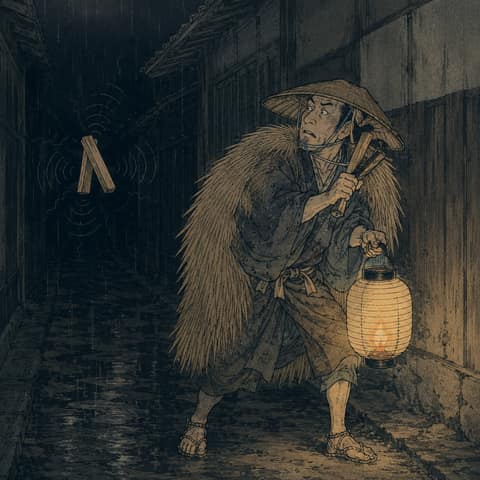
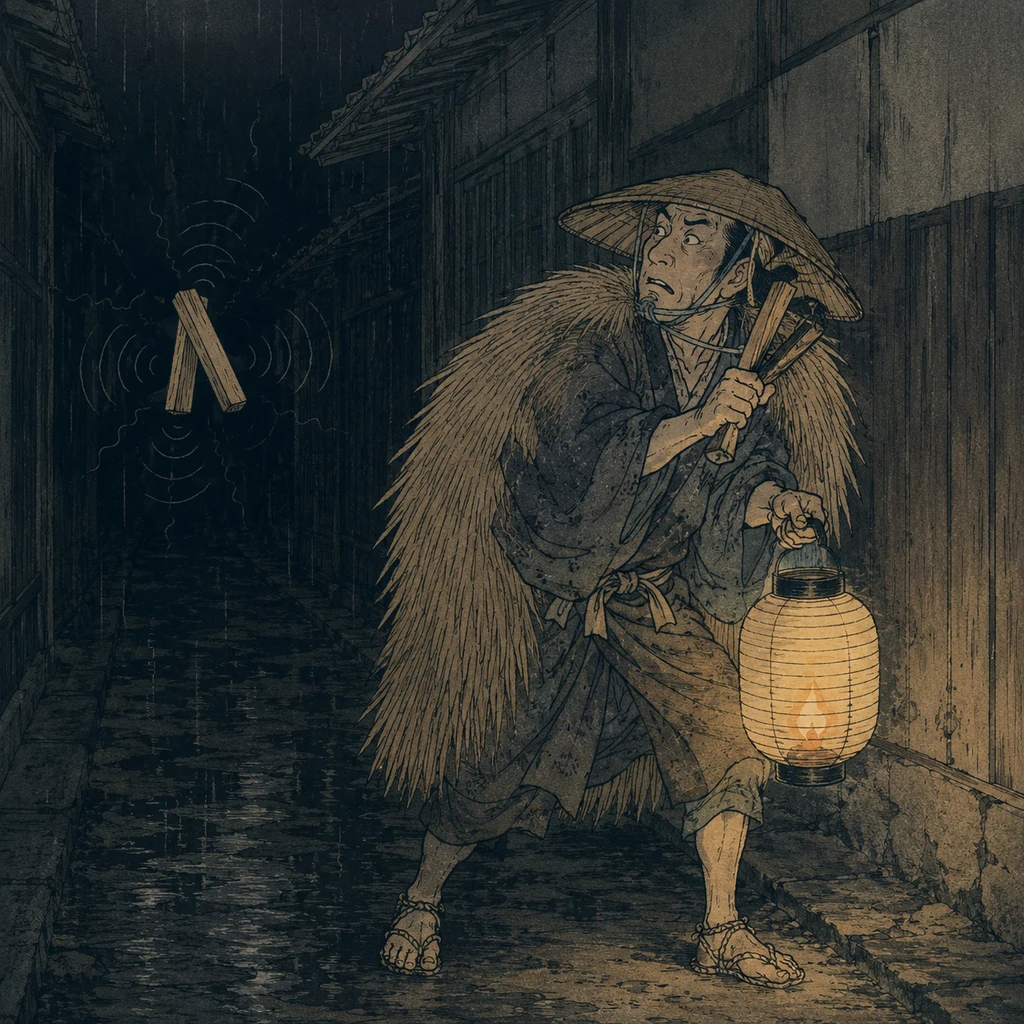
One of the “Seven Mysteries of Honjo” told around Edo’s Honjo district. When night watchmen struck their wooden clappers (hyōshigi) while calling “Beware of fire,” the same cadence would continue behind them even after they stopped, as if an unseen presence were escorting them. Some say it was simple echoing in the quiet streets, but accounts tell of the sound on rainy nights even without clappers being struck, so the tale endured as a mystery.
Read more南割下水(現・北斎通りのうち亀沢一丁目から四丁目あたり)と入江町(現・緑四丁目)に伝わるのが送り拍子木である。土砂降りの夜、合羽姿の夜回りが「火の用心」と拍子木を打ち鳴らして割下水沿いを歩くと、自分が打ち終えた後ろから、同じ調子でカチカチと拍子木の音が返ってくる。振り返っても何も見えない。先を急ごうとすると、また人を送るように背後から音がする。火災を最も恐れた江戸の町で、その防火の所作そのものが怪異に憑かれるという皮肉が、この話の核にある。
Tanuki Bayashi (Raccoon Dog Festival Drums)
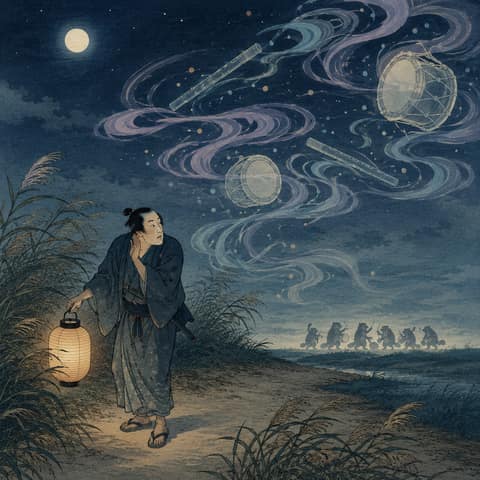
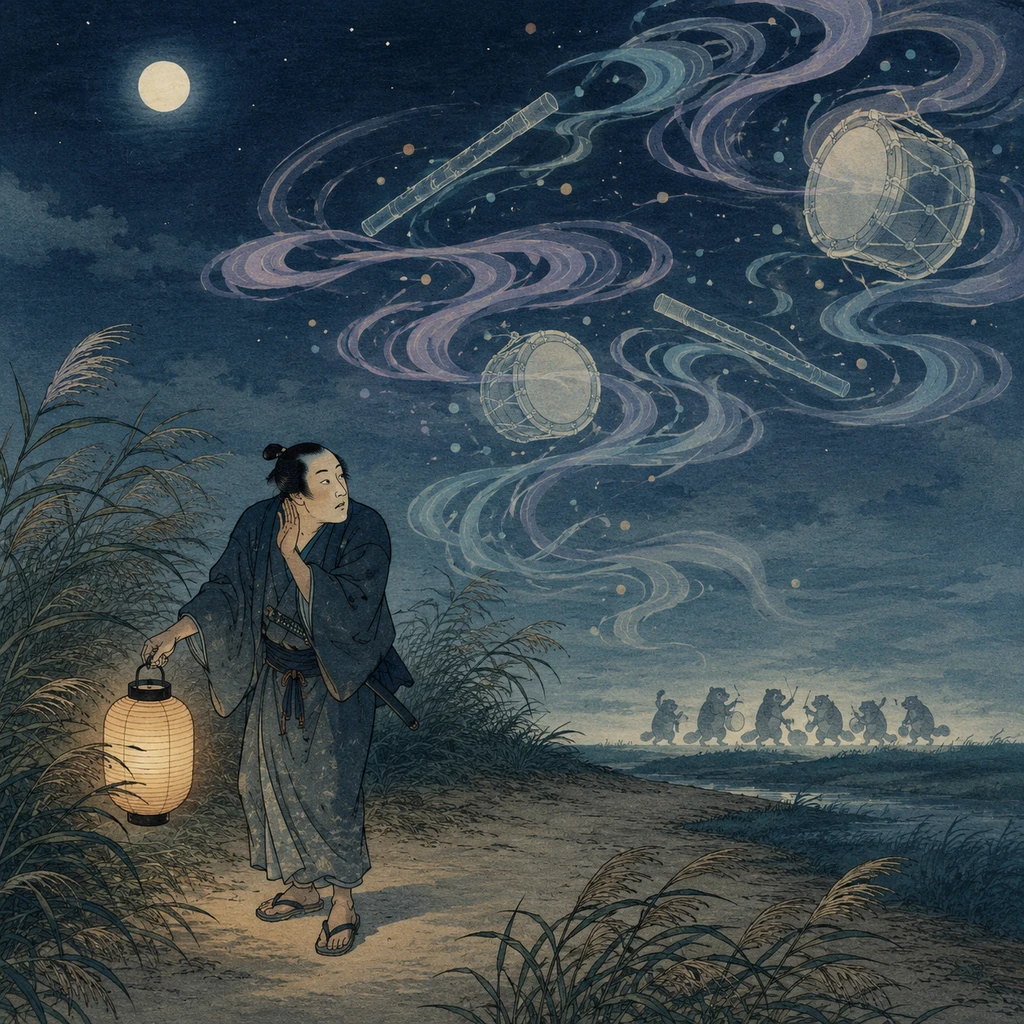
A nocturnal sound phenomenon: flutes, drums, and festival music seem to rise from nowhere. When pursued, the music recedes, making its source impossible to pin down. In Edo’s Honjo district it was called the “Fool’s Festival Music” and counted among the Seven Wonders of Honjo. Often blamed on mischievous tanuki, though no physical cause was confirmed. Some attributed it to windborne echoes and overlapping festival music. The name survives in the legend and children’s song of Shōjōji Temple in Chiba.
Read more本所一帯に広く語られたのが狸囃子、別名馬鹿囃子である。夜更けにどこからともなく笛と太鼓の囃子が聞こえてくる。音は大きくなったり小さくなったり、聞こえる方角も時とともにあちらこちらへ移る。音源を求めて歩けば、いつまでも辿り着けない。この怪異を最初に書き留めたのは、肥前平戸藩九代藩主松浦静山(1760-1841)[2]であった。文化三年(1806)に隠居した静山は本所の屋敷で余生を送り、文政四年(1821)から没年まで二十年余りをかけて随筆『甲子夜話』[2]を書き継ぐ。その続篇巻四十六に、自邸の界隈で夜更けに遠くから太鼓のような音が聞こえることを記した。本所七不思議の文献史は、この当事者の記録から始まる。書名の「甲子(かっし)」は、執筆を起こした夜が甲子の日であったことに由来する。
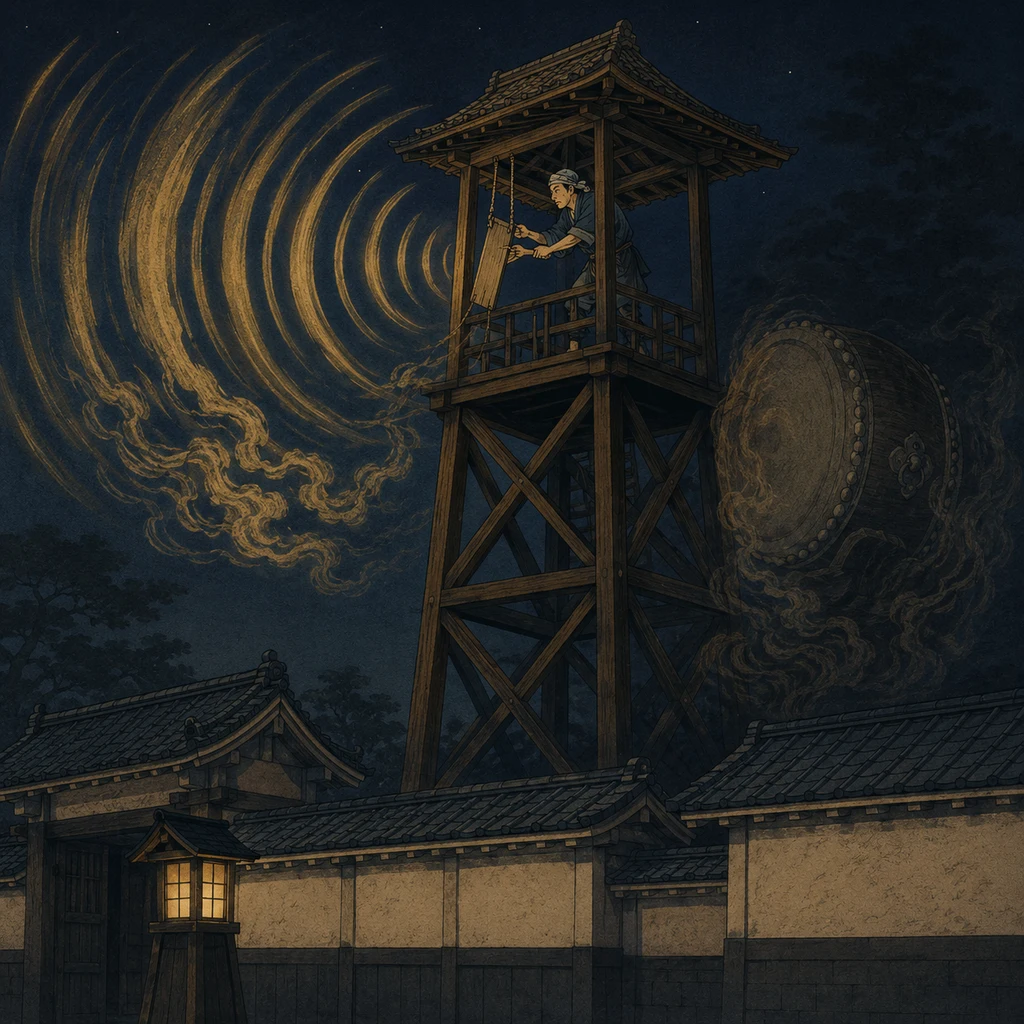
The Tsugaru Drum of Honjo
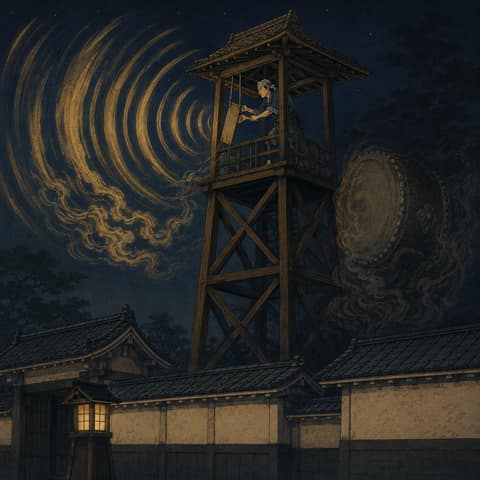
A curious tale from the fire watchtower of the Tsugaru Etchū-no-kami residence in Edo’s Honjo district: instead of the standard wooden clapper used to signal fires, a drum was hung and struck. The reason was never recorded. Another version claims that even when the clapper was hit, a drum’s booming sounded. Sometimes counted among the Seven Wonders of Honjo, it is occasionally omitted due to its faintly supernatural nature.
Read more音の怪のもう一つが津軽の太鼓である。本所(現・亀沢二丁目および緑二丁目あたり)にあった弘前藩津軽越中守の上屋敷には火の見櫓が立っていた。火災を知らせる際、ふつうの櫓は板木(ばんぎ)を打ち鳴らすところ、なぜかこの屋敷の櫓には板木ではなく太鼓が吊るされ、火事のときには太鼓を鳴らした。なぜ津軽家の櫓だけが太鼓だったのか、誰も知らない ── というのがこの話である。怪異としての起伏は乏しく、七不思議から省かれる版もある。だが弘前藩の江戸日記には、幕府の許可を得て太鼓を打っていたとする記述があり、史実としては「特例の許可」が背景にあったらしい。津軽固有の太鼓の慣行が、本所の町人の目には説明のつかぬ「異物」と映り、そのまま怪異として保存された。事実の層(藩の特例)と怪談の層(理由なき太鼓)が重なっている好例である。
光の怪 ── 送り提灯と消えずの行灯
闇が深いほど、わずかな灯火は強い意味を帯びる。本所には、近づけない灯と、消えない灯の二つの光の怪がある。
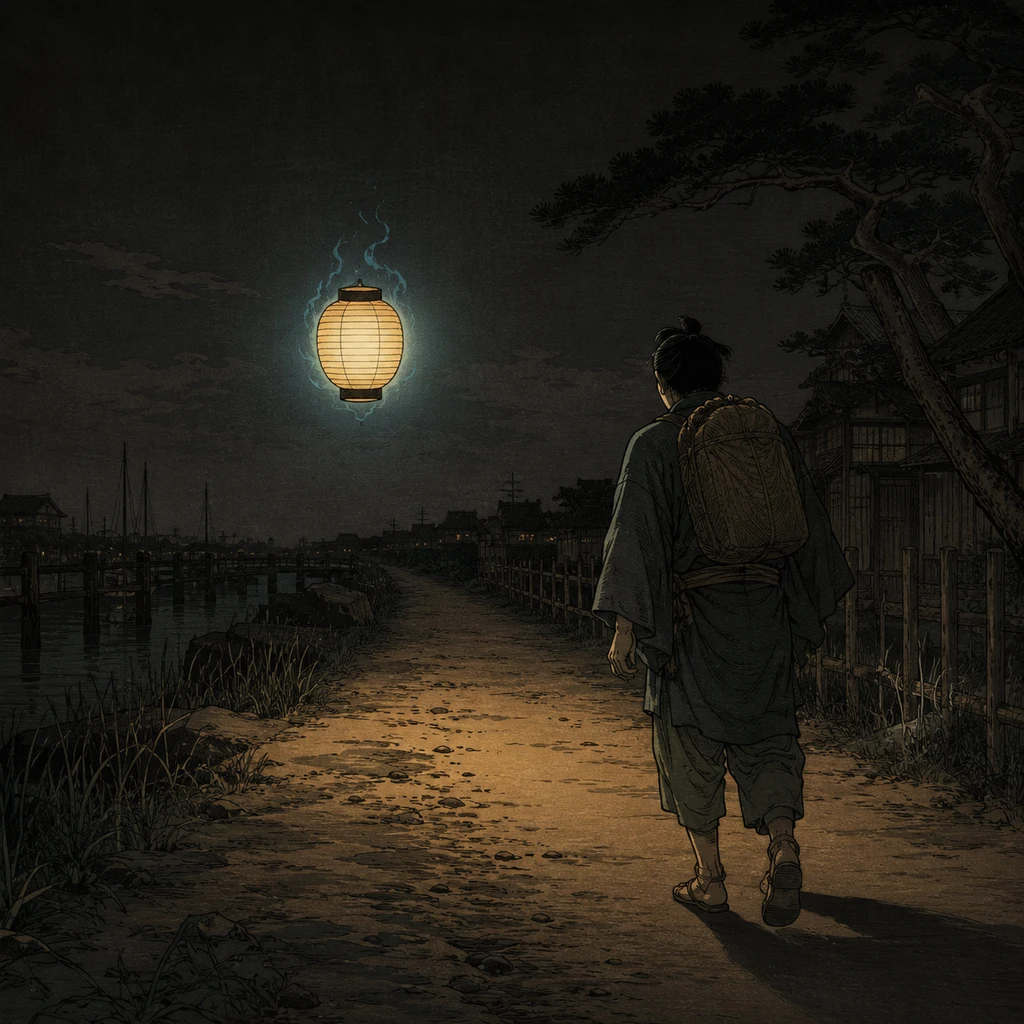
Guiding Lantern (Okuri-chōchin)
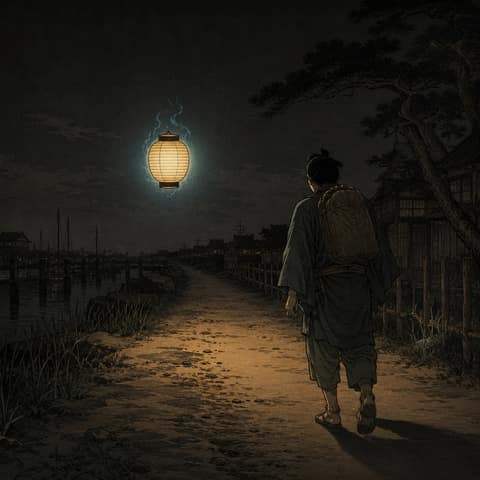
A will-o’-the-wisp-like light that appears before travelers without a lantern on night roads, gliding ahead as if to lead them on. When approached it snuffs out; when distance grows it reappears, always just out of reach. Counted among the Seven Wonders of Honjo in Edo, it’s akin to the “Guiding Clappers” and to Odawara lanterns that mislead people, and is related to the trickster lantern spirit known as Chōchin Kozō. It seldom harms; its nature is to toy with people and throw their journey into confusion.
Read more大横川の近く、法恩寺出村(現・太平一丁目)に伝わるのが送り提灯である。人気のない夜道を歩いていると、道の先にパッと提灯の灯がともる。連れがいるのかと近寄ると、灯はふっと消えてしまう。暗闇に驚いていると、また道の先に灯がともる。これを繰り返し、決して提灯に追いつくことはできない。提灯を持つ者の姿は見えず、ただ灯だけが一定の距離を保って先を行く。夜道の安全と不安のあわいに生じる怪火として、本所の住人に長く語り継がれた。
提灯の怪と対をなすのが、南割下水(現・北斎通り、亀沢一・二丁目あたり)に伝わる「消えずの行灯」、別名「灯無蕎麦(あかりなしそば)」である。寒い夜、割下水沿いに屋台の蕎麦屋の行灯が見えるのに、人の気配がまるでない。不審に思い、せめて行灯の火を消そうとしても、その火はどうしても消えない ── あるいは逆に、灯のともらぬ蕎麦屋台で火を点けようとした者に不幸が訪れる、と語る版もある。屋台という、当時の本所に増えつつあった新しい都市の風景が、そのまま怪異の器になっている。
草木の怪 ── 片葉の葦と落葉なき椎
音や光と並んで、本所七不思議には植物の異常を介して語られる二つの怪がある。いずれも、植物の不自然さの背後に人の怨念や忠義の記憶を読み込もうとする、寡黙だが含意の深い怪である。
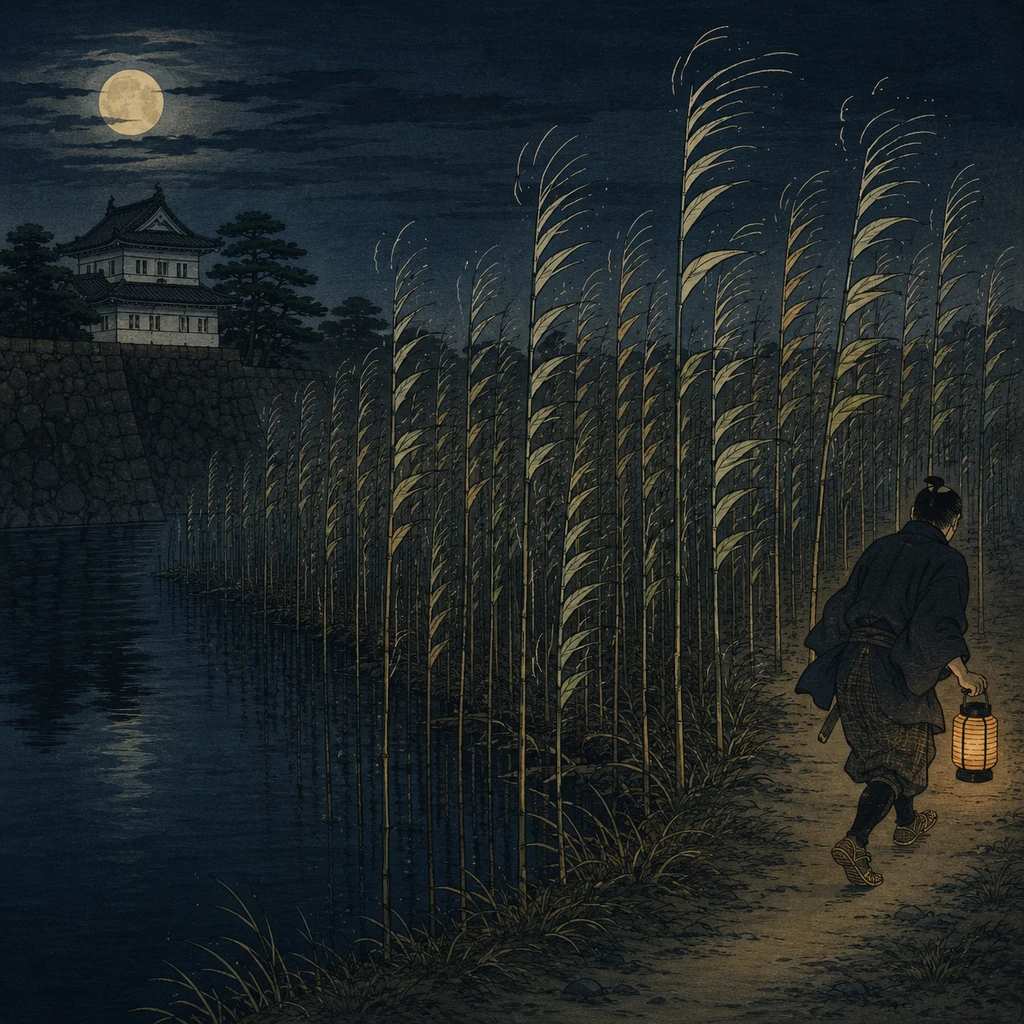
The One-Leaved Reed
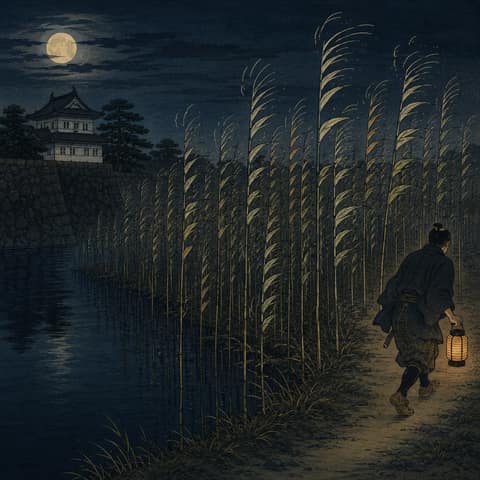
One of the “Seven Wonders of Honjo” from Edo. After a certain incident, the reeds growing along the canal were said to sprout only a single blade, a strange botanical sign taken as proof of a curse or lingering grudge. Some versions name a culprit or victim, but details vary by period and source, and the cause is usually left unexplained.
Read more現在の両国一丁目、かつて両国橋の東詰近くに駒留橋(駒止橋)という小橋があり、その下を隅田川から引いた堀が流れていた。そこに生える葦が、なぜか葉が片側にしか付かない ── このことからこの堀は「片葉堀」と呼ばれた。片葉の葦の名はここに由来する。後世の講談・落語は、この植物の奇異に物語を与えた。本所の長屋に住む倉蔵という男が、川崎町のお駒という美しい娘に言い寄って袖にされ、逆上して駒留橋でお駒を待ち伏せ、刃物で刺し殺したうえ手足を切って堀に投げ込んだ。それ以来、堀の葦は片側にしか葉を付けなくなった ── という筋立てである。植物の片側性という観察可能な事実が先にあり、そこへ殺人と怨念の物語が後から接ぎ木された、創作層の典型を示す話である。
The Oak That Never Shed Its Leaves
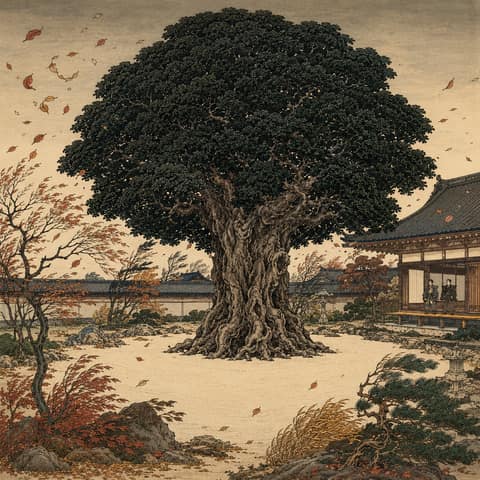
In the Edo period, a venerable chinquapin/oak tree in the garden of the Matsuura clan’s upper residence at Hirado Shinden, Honjo, was said never to drop a single leaf throughout the year. Counted among the “Seven Wonders of Honjo,” it was viewed as ominous because even evergreens shed leaves. Household members kept their distance, feeling it foretold misfortune. Accounts differ on the exact site and the identity of the actual tree, and details remain uncertain.
Read moreそして、この記事の起点である落葉なき椎である。本所横網一丁目、旧安田庭園に隣接する平戸新田藩松浦家の上屋敷には、見事な椎の古木があった。常緑樹である椎は本来わずかずつ葉を落とすものだが、この木は四季を通じて一枚の葉も落とさなかったと噂された。屋敷の人々はしだいに不気味がり、ついにこの屋敷を使わなくなったと伝わる。この椎にちなみ、屋敷は「椎の木屋敷」と呼ばれた。現在の刀剣博物館・同愛記念病院のあたりが、その跡地に相当する。
落葉なき椎を伝えた松浦家の屋敷には、もう一つの史跡が結びつく。寛永八年(1631)、暴風雨で隅田川が増水した際、三代将軍徳川家光が本所の被害検分を命じたところ、阿部豊後守忠秋ただ一人が荒れ狂う川を馬で渡って忠勤を示した。その馬を繋いだとされる石が「駒止石(こまどめいし)」で、もとはこの松浦家上屋敷前の隅田川岸にあり、現在は旧安田庭園内に移されて見ることができる。落葉なき椎の怪異と駒止石の忠義譚が、同じ松浦家の屋敷を舞台に重なっている点に、本所横網という土地の記憶の厚みがある。
七不思議の周縁 ── 置行堀と足洗邸
ロスター六話のほかに、本所七不思議を語るうえで欠かせない二つの怪を背景として触れておく。
最も有名なのが「置行堀(おいてけぼり)」、別名「置いてけ堀」である。本所の堀で釣りをして釣果を持ち帰ろうとすると、水中から「置いてけ、置いてけ」と声が響く。怖くなって魚を置いて逃げ帰ると魚籠は空、あるいは魚を持ったまま帰ると家族が消えていた、と語る版もある。場所は錦糸堀(現・錦糸町・北斎通り沿い)とも、御竹蔵周囲の堀(現・横網一・二丁目)とも伝わり、本所横網のすぐ近くにもその比定地がある。声の主は河童とも狸とも諸説あり定まらない。「置いてけぼり」という日常語の語源としても広く知られ、本所七不思議のなかで最も都市生活に根を張った怪である。
もう一つが「足洗邸(あしあらいやしき)」である。本所三笠町(現・亀沢四丁目)の旗本屋敷で、夜になると天井を突き破って毛むくじゃらの巨大な足が現れ、「足を洗え」と命じる。言われたとおりに洗ってやると足は天井へ消えるが、洗うのを怠ると暴れて天井を踏み抜く。武家屋敷の天井という閉鎖された室内空間を舞台に取った点で、屋外の堀や水路を舞台とする他の話とは趣を異にし、本所七不思議の幅広さを示している。
都市怪談としての本所七不思議
本所七不思議が日本の怪異史において特異なのは、その舞台がことごとく「都市の装置」だという点にある。堀・割下水・橋・夜回り・蕎麦屋台・大名屋敷・火の見櫓 ── どれも明暦の大火後に整備された新しい本所の都市インフラであり、住人の日常の只中にある。深山幽谷に棲む古来の妖怪とは異なり、本所の怪は人が暮らす町の隅に異物として滑り込む。自然怪異から都市怪異への転換が、ここに明瞭に現れている。
この型は近代以降の都市伝説に直接受け継がれた。背後に付き従う送り拍子木や送り提灯は「もう一人の同行者」という構図を、津軽の太鼓は「説明のつかぬ日常の異物」という構図を、それぞれ先取りしている。学校の怪談やトイレの花子さん、口裂け女といった現代の都市伝説が踏襲する語りの枠組みは、すでに江戸後期の本所で出来上がっていた。
そして、これらの怪異の記録と増殖を支えたのが出版と話芸であった。最初に文字に留めたのは当事者・松浦静山の『甲子夜話』[2]という随筆であり、その後は落語・講談・錦絵が場所ごとの怪を物語へと膨らませ、「七」の数を版ごとに組み替えながら語り継いだ。事実の層(割下水の地形、津軽家の太鼓の特例、松浦家の椎)の上に、創作の層(片葉の葦の殺人譚、足洗邸の巨足)が幾重にも重なる。本所七不思議とは、新開地の都市環境が生んだ素朴な怪異の核に、江戸庶民の話芸と出版文化が肉付けし続けた、都市怪談の原型なのである。
落葉なき椎の立った本所横網を歩けば、今は刀剣博物館や旧安田庭園が静かに並ぶばかりで、葦の堀も割下水も大半は埋め立てられて道路に変わった。だが、地名と石碑をたどれば、堀と水路の闇に灯った七つの怪の現場は今も確かにそこにある。江戸の都市怪談の全体像は東京都の妖怪事典に詳しいが、その発祥の地は、まぎれもなくこの本所の堀端であった。