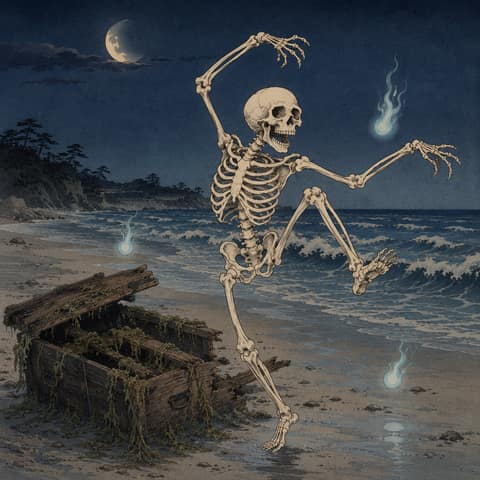
Mizo-Idashi
MEE-zoh-ee-DAH-shee
Ehon Hyaku Monogatari Version
Based on the depiction of Mizude in Takehara Shunsen’s Ehon Hyaku Monogatari. As censure for the abandonment of a corpse, bare bones rise of their own accord to sing and dance, symbolizing that mistreating the dead invites the uncanny. Closer to a tale of vengeful spirits than to a mere monstrosity, it manifests signs from the unoffered dead. Though the dancing and singing appear comical, the didactic thrust is strong, urging proper funerary rites. Specific places and names—Yuigahama, Hachirō of Tone, Hōjō Tokiyuki—anchor the story in the memory of war chronicles. The plot in which temple monks bury the bones to quell the anomaly exemplifies the temple’s social role of pacifying spirits through memorial rites.