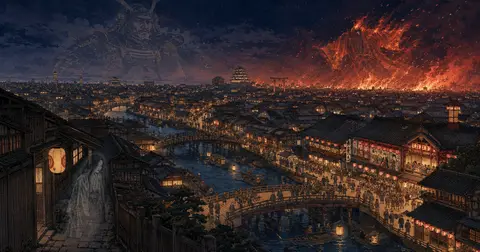
太平洋に向かって伸びる坂東の東端、いまの茨城県のほぼ全域を占めた古き国を常陸国という。元明天皇の和銅六年(七一三)に発せられた風土記撰進の官命を受け、養老年間ごろに編まれたとされる『常陸国風土記』[1]は、出雲・播磨・肥前・豊後とならぶ現存五風土記の一つで、その総記に驚くべき一句を記している ── 古老の言うには、ここは「常世の国」ではないか、と。海と山の幸に富み、田を墾けば実り、桑を植えれば栄える。死なず老いぬ理想郷である常世に、この国はもっとも近い、というのだ。
豊穣の讃辞の裏で、風土記は同時に古代常陸の怪異を書き留めている。新田を開く人と争った角ある蛇神、丘の上から海辺へ手を伸ばして蛤を食らった巨人、筑波山に男女が集って歌い交わした歌垣 ── 神話とも史実ともつかぬ説話が、郡ごとの地誌のなかに息づく。常陸はいわば、日本の妖怪文化がもっとも早く文字に定着した国の一つなのである。
この記事は、常陸国を現代に引き継いだ茨城県の妖怪事典とは射程を変え、古代 ── 風土記が描いた「常世の国」の記憶を軸に据える。鹿島の要石や平将門、牛久沼の河童といった県全体の宏観はそちらに譲り、ここでは古き地誌の蛇神と巨人を背景に、近世の絵師が常陸の名とともに残した三体の怪 ── 雷とともに降る雷獣、晴れを告げる日和坊、図像だけが宙に浮くわいら ── を結び直してみたい。
常世に最も近い国・常陸
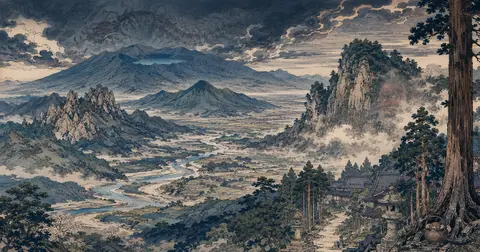
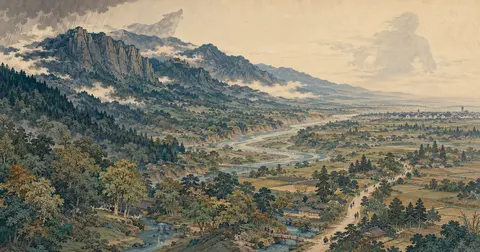
『常陸国風土記』[1]の総記は、常陸という国号の由来を二つ挙げる。一つは、道が常に陸続きで江海の渡しを経ずに往来できる「直道(ひたみち)」の意。もう一つは、倭武天皇(日本武尊)が新治の井で手を洗ったとき衣の袖が泉に漬かった ── その「ひたす」にちなむという語源説である。いずれにせよ風土記の筆は、この国を新治・筑波・信太・茨城・行方・香島・那賀・久慈・多珂の九郡に分けて記し、その総記の冒頭で「古老のいへらく、古、人有りて、常世の国といひき」と讃える。海・山・川の幸が豊かで、田を墾けば富み、蚕を飼えば栄える ── まさに不老不死の楽土たる常世にもっとも近い豊穣の地だ、というのだ。
この「常世の国」という自負こそ、常陸の怪異を読み解く鍵である。豊かさは恵みであると同時に、人の手の及ばぬ自然の力への畏れを伴う。山には山の主が、谷には水の神が、丘には巨人が棲む ── 人が田を拓き里を広げるとき、それらの先住の力と必ず衝突する。古代常陸の説話は、この「人の領分」と「神の領分」の境界をめぐる物語として読むことができる。風土記が伝える二つの代表的な怪異 ── 角ある蛇神と海辺の巨人 ── は、まさにその境界の上に立っている。
風土記の蛇神と巨人 ── 夜刀神とダイダラボウ
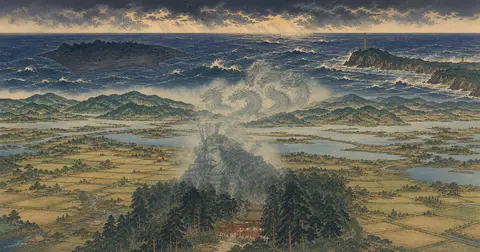
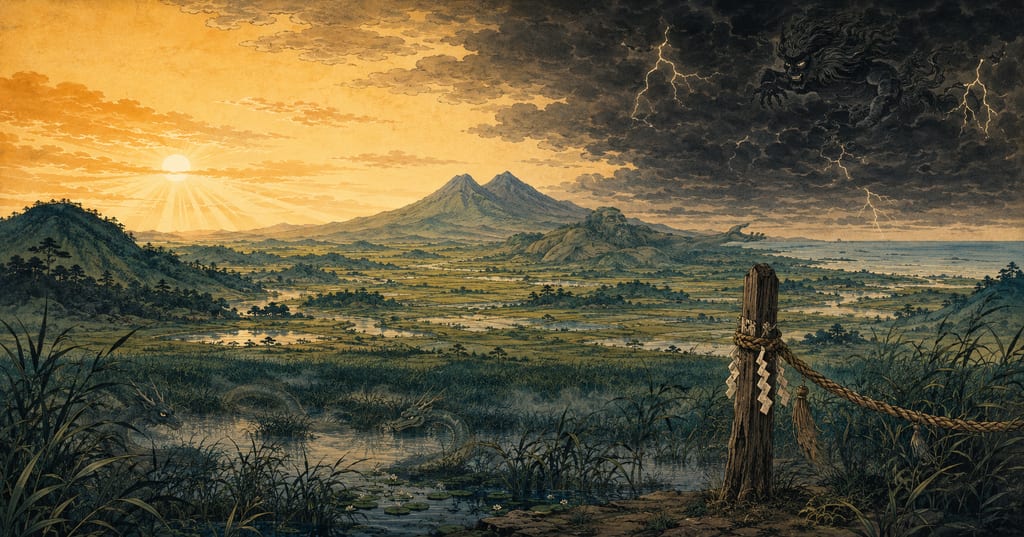
古代常陸の怪異でもっとも名高いのが、行方郡に伝わる夜刀神(やとのかみ)[2]である。風土記によれば、それは蛇の身に頭の上に角をもつ神で、その姿を見た者は一家を破滅させ、子孫も絶えるとされた。「夜刀」は谷(やと、やつ)に通じ、湿地の谷あいに潜む水の精霊が蛇の形をとった姿だと考えられている。
継体天皇のころ、箭括氏麻多智(やはずのうじのまたち)という人物が、郡家の西の谷の葦原を開いて新たな田としようとした。すると夜刀神が群れをなして現れ、ことごとく妨げて田を作らせない。怒った麻多智は甲冑を着け矛をとって蛇神を打ち殺し、追い払った。そして山の登り口の境の堀に標の梲(しめのつえ ── 境を示す杖)を立て、神に向かってこう宣言する。「ここより上は神の地としてよい。だがここより下は人の田とする。今より後、われは神を祀る祝(はふり ── 神官)となろう。どうか祟りをなし、恨むことのないように」。麻多智は社を建てて夜刀神を祀り、その子孫が祭祀を代々受け継いで、風土記の編まれた当時もなお続けていたという。
この説話の凄みは、神を打ち殺しながら、同時にその神を祀る神官になる、という両義性にある。人は自然を切り拓いて田とするが、切り拓かれた側の力を完全に滅ぼすことはできない。だから境界を定め、神の領分を残し、祀ることで祟りを鎮める ── 開発と祭祀が一体となった古代日本人の自然観が、ここには結晶している。下って孝徳天皇のころには、壬生連麿(みぶのむらじまろ)が谷の池に堤を築こうとした際にも夜刀神が椎の木に群れ集まり、麿が「目に見える神も見えぬ神もことごとく打ち殺せ」と命じると神は退いた ── その池は椎井の池と名づけられたと風土記は記す。蛇神と人の攻防は、一度きりではなく繰り返し語られたのである。
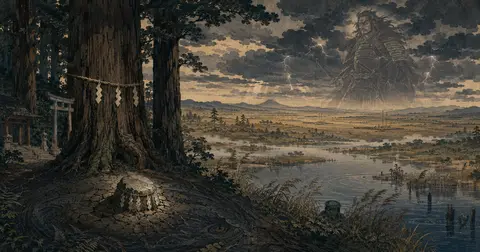
もう一つ、風土記が伝える太古の巨人がいる。那賀郡の大櫛岡(おおくしのおか)[3]に住んだ身の丈ことのほか長大な人 ── 丘の上に寝たまま手を海辺まで伸ばし、大蛤を掘って食らい、その貝殻が積もり積もって丘になった、と記される。風土記はこの貝の岡を「大朽(おおくち)」と呼んだのが転じて大櫛になったと説く。この巨人は、後世にダイダラボウ(ダイダラボッチ)と総称される国引き・山造りの巨人信仰の、もっとも古い文献例の一つに数えられる。水戸市大串町には今も大串貝塚が残り、ダイダラボウの巨像が立つ。富士山を背負って運んだ、足跡が沼になった ── そうした巨人譚は全国にあるが、文字に書き留められた最古級の証言が、ほかならぬ常陸の地誌だったのである。
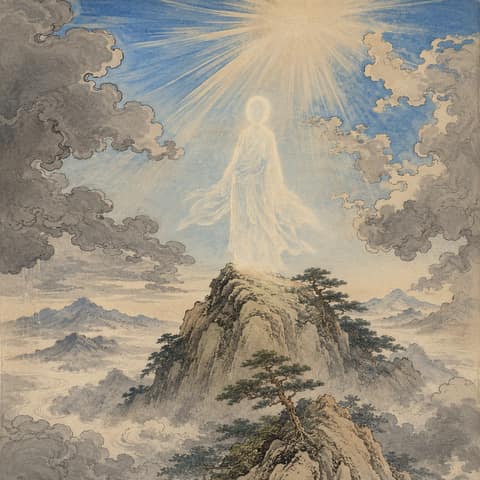
そして筑波山には、もう一つ常陸らしい古代の記憶が宿る。風土記の富士筑波伝説と歌垣[4]である。神祖尊(みおやのみこと)が諸国をめぐり、夕暮れに駿河の福慈岳(富士山)に宿を乞うたところ、富士の神は今宵は新嘗の物忌みゆえと断った。怒った神祖尊は「お前の山は冬も夏も雪が降り積もり、人も登らず、食べ物を供える者もないだろう」と告げる。次いで筑波岳を訪ねると、筑波の神は新嘗のさなかであっても快く宿を貸し、飲食を奉った。喜んだ神祖尊は「この山は人々が集い、歌い舞い、飲食ゆたかに、代々栄えて尽きることがないだろう」と祝福した ── ゆえに富士は雪に閉ざされ、筑波は今も男女が登り集って歌を交わす、というのだ。事実、風土記の筑波郡段には、関東一円から男女が筑波山に集い、嬥歌(かがい ── 歌垣)を行って歌をうたい交わし、夜を共にした賑わいが活写される。蛇神と巨人が「人と神の境界」を語るとすれば、筑波の歌垣は「神の山で人が生を謳歌する」祝祭であり、常陸が常世の国と讃えられた豊穣の、もっとも明るい一面だった。
これら夜刀神・ダイダラボウ・筑波の神は、いずれも DB の妖怪名簿には含まれない古代説話の住人だが、常陸という国の怪異の土壌そのものである。この豊穣と畏れの地に、近世の絵師たちは新たな三体の怪を結びつけた。
雷とともに降る獣 ── 雷獣
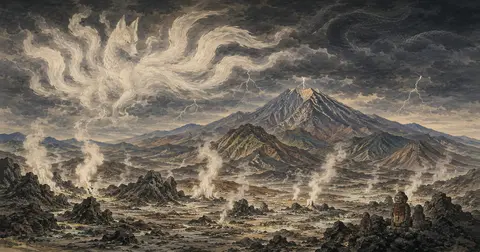
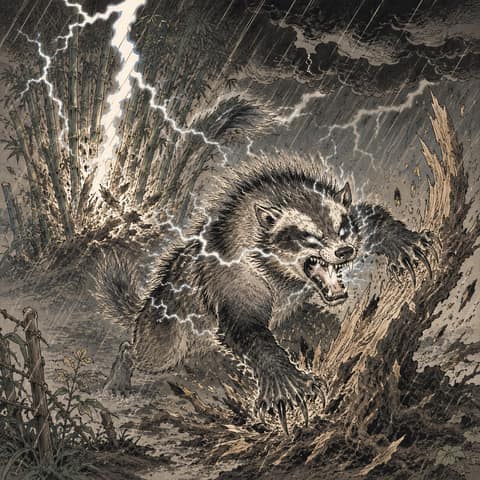
常陸の山あいには、雷とともに天から落ちてくる獣の話が古くから語られた。雷獣である。激しい雷雨や落雷とともに地に降り立つというこの獣は、常陸国久慈郡を一つの原拠としながら、近世には信濃・出羽・下野など各地で目撃譚が記録された、江戸博物趣味の花形だった。
Raijū
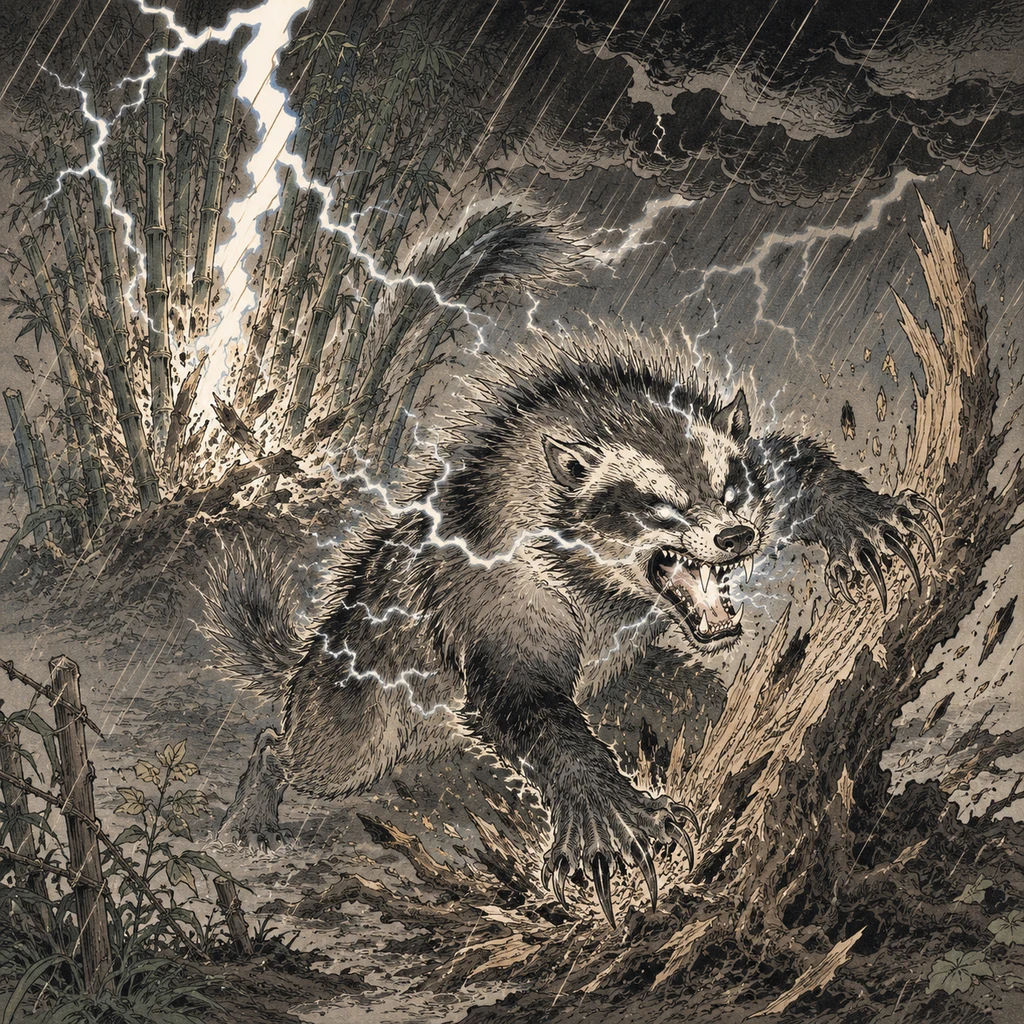
A beastlike yokai feared for plummeting from storm clouds with thunder, racing wildly through trees and fields. Its fur bristles and claws are sharp; in some regions, split bark and scorch marks from lightning strikes were taken as its traces. If it falls near people, they may be stunned and left dazed. When the storm subsides it vanishes and ascends back to the heavens. Accounts vary: it is said to resemble a fox or tanuki, and to be about the size of a weasel.
Read more雷獣[5]の姿は記録によって大きく振れる。あるものは狼に似て前脚二本・後脚四本、尾が二股に分かれた異形といい、あるものは全長二尺ほどで鼬や猫のようだといい、毛は灰色や黒みを帯びるとも、日中は黄茶に輝くともいう。地域によって鼠ほどの小ささから八尺に及ぶ「雷龍」まで大きさもさまざまだ。だが共通して語られるのは、鷲のごとく鋭い爪である。雷雲に乗って飛び、墜ちるときにその爪で樹皮を引き裂くため、落雷で裂けた木は雷獣の仕業だと考えられた。落雷の近くにいた者は気を奪われて呆然となるが、玉蜀黍を食べれば癒える ── そんな民間の対処法まで伝わっている。
雷の多い関東平野では、空から何かが落ちてくるという実感が雷獣像を支えた。落雷に驚いて木から転げ落ちた小動物を、人は天が遣わした獣と見たのだろう。今日ではその正体を、イタチ・ハクビシン・ムササビ・アナグマ・カワウソなどの誤認とみる説が有力で、とりわけ江戸の雷獣図はハクビシンを写したものだとの指摘もある。江戸両国や尾張では信州産の「千年鼬」と称する雷獣が見世物に供されたが、後にこれらの多くは鼬や穴熊を細工した作り物だったと判明している。事実として確かなのは「雷とともに降る獣という想像が常陸を含む各地に広く分布した」ことであり、その正体は今も動物誤認説に留まる ── 自然現象に獣の姿を与えるこの想像力こそ、妖怪を生む母胎である。常陸が雷獣の一原拠とされるのは、雷の絶えぬ平野と、常世の国の豊穣を脅かす天の力への畏れが重なった結果だといえる。
晴れを告げる精 ── 日和坊
雷とともに降る獣がいる一方で、常陸の山には晴れの日にだけ現れる穏やかな精もいた。日和坊(ひよりぼう)である。

Hiyori-bō (Fair-Weather Monk)
A yokai depicted by Toriyama Sekien in Konjaku Gazu Zoku Hyakki, said to preside over clear weather. It appears on sunny days and not in the rain. Beyond Sekien’s notes, verified folk reports are scarce and oral traditions remain uncertain. Scholars have linked it to teru-teru bōzu, but no definitive source confirms this origin. Its name is discussed in relation to regional weather-prayer terms like “hiyori-bōzu.”
Read more日和坊は、鳥山石燕が安永八年(一七七九)に刊行した『今昔画図続百鬼』[6]に描かれた妖怪である。石燕はその詞書に「常州(常陸国)の深山にあり。雨ふれば形をかくし、天霽(は)るる日は形をあらはす」と記し、岩陰から穏やかに顔を覗かせる坊主頭の姿で描いた。常陸の山の晴天を司る精霊 ── という設定は、農事も洗濯も天気に左右された時代に、雨と晴れの境に立つ里山の素朴な祈りを思わせる。岩陰に隠れて晴れの日だけ顔を出すというその慎ましさは、雷獣の荒々しさとは対照的に、常世の国の穏やかな里山の気配をまとっている。
ここには慎重な留保がいる。石燕は同じ詞書で「今、児女、白布をもて偶人をつくり、これを祭りて晴を祈る。これを日和坊主といふは、この精霊を祭るなるべし」と書き添え、晴れを願って吊るすてるてる坊主はこの精霊を祀るものではないか、と推量している。だがこの妖怪は、石燕の記述以外に確たる民間伝承の報告例がほとんどなく、てるてる坊主の起源が本当に日和坊なのかは確証がない。むしろ石燕が、当時すでに広まっていたてるてる坊主の風習から逆に妖怪像を造形した可能性も指摘されている。事実として確かなのは「石燕が常州の山の精として日和坊を描いた」ことであり、てるてる坊主との因果はあくまで石燕の推量である ── ここを混同しないことが、この妖怪を正しく読む条件だ。常陸の名を背負いながら、その実体は一人の絵師の筆から立ち上がった、近世生まれの精霊なのである。
石燕が描いた常陸の怪 ── わいら
日和坊と並んで、常陸の名とともに後世へ伝わったもう一体が、わいらである。だがその伝わり方は、日和坊よりさらに奇妙だ。

Waira
A mysterious yokai named only in Edo-period picture scrolls, with no surviving explanation. It is depicted with an immense, ox-like upper body and a single thick hooked claw on each forelimb. It appears in works like Hyakkai Zukan and Gazu Hyakki Yagyo; its lower body is unknown. Beyond its name and image, little is recorded, so its nature and origin are unclear. It is often paired with Otoroshi and treated as an embodiment of fear.
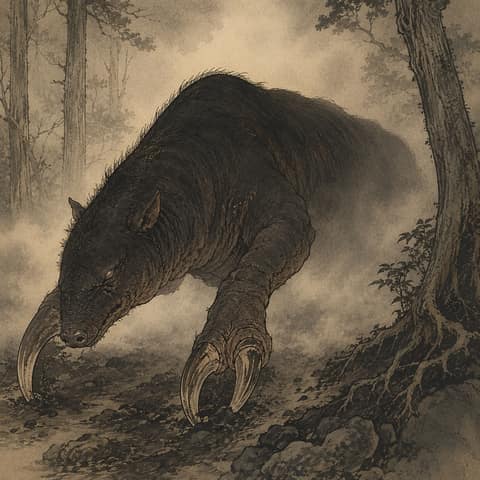
Read moreわいらは、佐脇嵩之の『百怪図巻』(元文二年・一七三七)をはじめとする「化物尽くし」系の絵巻に古く描かれ、のち鳥山石燕の『画図百鬼夜行』[7](安永五年・一七七六)の陰の巻にも収められた。肥えた牛のような巨躯の上半身に、前肢へ一本ずつ伸びる太く鋭い鉤爪を備え、地に這いつくばる姿で表される。しかし注意すべきは、これらの絵巻・画集には名前以外の解説文が一切なく、下半身すら描かれていないことだ。名の由来も性質も本文に記されず、「わいら」が何を意味するのかも分かっていない。石燕の『画図百鬼夜行』では、収められた多くの妖怪が名のみを記して解説を欠いており、わいらもその一つにすぎない。
つまりわいらは、絵だけが先にあって物語が後から来た、由来不明の怪なのである。「山奥に住み、鉤爪で土を掘ってモグラを食らう」「人を襲って喰う」といった解説は、いずれも昭和以降の妖怪図鑑や児童書[8]が後から与えた性格づけであって、江戸期の一次資料には伝承の類が一切残っていない。山田野理夫『おばけ文庫』には、常陸国の医者・野田元斎が山中でモグラを掘り喰らうわいらに出会ったとする逸話が載るが、これも著者による創作の色が濃いとみられる。常陸という土地の名さえ、こうした後世の創作層のなかで強く結びつけられてきた可能性に留意すべきだろう。それでもなお現代の図鑑がわいらに棲み処や食性を与え続けるのは、人が「説明のつかない姿」に耐えられず、たえず物語を補おうとするからにほかならない。
日和坊が「風習から妖怪へ」、わいらが「図像から伝承へ」と、ともに本来の順序を逆さまに辿った例であることは興味深い。風土記の夜刀神やダイダラボウが、古代の人々の自然との格闘から自然発生した怪だったのに対し、石燕が常陸の名とともに残したこの二体は、近世の絵師が各地の断片を集め、想像で補いながら妖怪を一つの体系へと「編集」していった営みそのものを物語っている。常陸の山は、古代には説話を生み、近世には書物のなかで新しい怪を生む舞台にもなったのである。
常世の記憶を受け継ぐ国
こうして常陸国の怪異を古代から近世へと辿ると、一本の糸が見えてくる。海と山の幸に恵まれ「常世の国」と讃えられたこの豊穣の地では、恵みの大きさがそのまま、人の手に負えぬ力への畏れの大きさだった。だから人は、田を拓くたびに神の領分との境界を定め、夜刀神を打ち殺しながらも祀り、巨人の食べた貝殻の岡を語り継ぎ、筑波の山に登って歌を交わして生を寿いだ。境界を引き、畏れ、祀る ── 古代常陸の説話は、その作法の記録である。
近世になると、その同じ土壌の上に、絵師たちが新たな怪を描き加えた。雷の絶えぬ平野には天から降る雷獣を、穏やかな里山には晴れを告げる日和坊を、そして物語を持たぬ謎の鉤爪の獣わいらを、常陸の名とともに紙の上に定着させた。古代の夜刀神が人と神の格闘から生まれたのに対し、近世の三体は書物と絵筆のなかから生まれた ── 怪異の生まれ方そのものが、千年あまりのあいだに変わっていったことが、常陸という一つの国を通して見えてくる。
常世にもっとも近いと讃えられた国は、日本でもっとも早く怪異を文字に刻んだ国の一つでもあった。その記憶は、常陸国を受け継いだ茨城県の妖怪事典の鹿島の要石や水郷の河童へと、今も脈々とつながっている。豊穣と畏れ、その分かちがたい同居のなかにこそ、常陸国の妖怪文化の核心がある。