🔤 Yokai by Kana

Find yokai in hiragana order

81 Yokai|12 Category|Page 4 of 4
Localization in Progress - More content available in Japanese version
View Japanese

Filter by hiragana row

Sort by: ReadingAscending
Houki (Fengxi)

Houki (Fengxi)

Uncommon

FOO-kee

Houki, the Foreign Beast of Sanglin

Animal ShapeshifterA foreign beast originating from the Chinese "Classic of Mountains and Seas" (Shanhaijing). Mentioned only by name in Edo-period tales of foreign lands, without tying into Japanese geographical folklore.

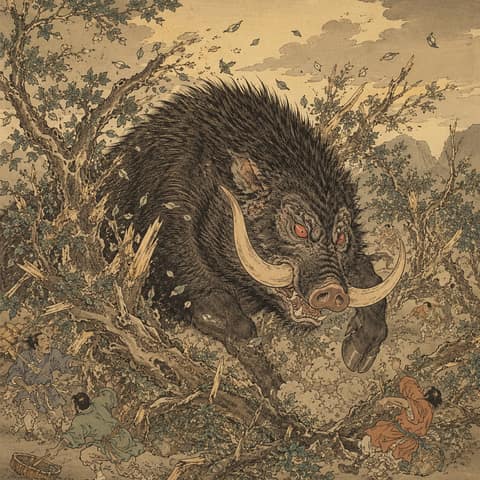
Houki is originally not a Japanese yokai, but a colossal and ferocious wild boar monster (or divine beast) recorded in ancient Chinese mythology and geographical texts such as the *Classic of Mountains and Seas* (Shanhaijing). Pronounced "Fengxi" in Chinese, it became established in Japan through its Sino-Japanese reading "Houki". According to legend, it is an impossibly massive boar completely covered in a hide as hard as armor. It was feared as a living disaster, using its overwhelming power to ravage farmlands and devour people. In Japan, it was introduced to the educated class via "tales of foreign lands" in Edo-period encyclopedias like the *Wakan Sansai Zue*, but it never developed into a folk belief (folk yokai) rooted in local regions. For a long time, it remained merely an "imported monster" confined to the pages of books. However, in modern times, its name has suddenly been thrust into the spotlight through pop culture media such as manga and anime.
Broom Spirit (Hōkigami)

Broom Spirit (Hōkigami)

Epic

HOH-kee-gah-mee

Folk Belief Version – Broom Deity

Deities & Divine SpiritsVarious regions across Japan

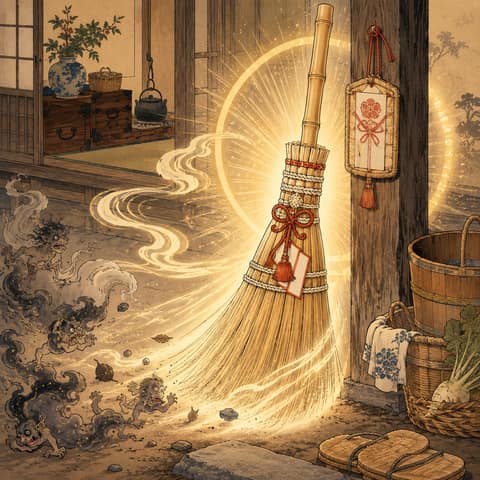
Hōkigami is a tutelary spirit believed to dwell in household brooms. In folk belief, the act of sweeping carries powers of purification and gathering, tying the broom to rites of cleansing doorways and childbirth. In some areas the broom is venerated as a sacred vessel, and taboos warn against stepping over or on it. Practices include standing a broom upside-down to send lingering guests home and placing one by the pillow as a charm for safe delivery. Toriyama Sekien also depicted it as a tsukumogami (tool-turned-spirit).

Penghou

Penghou

Uncommon

POONG-hoh

Edo-Period Scholarly Edition (Bibliographic and Picture Scroll Tradition)

Natural Phenomena SpiritsIntroduced from China (appearing in Japanese bibliographies and picture scrolls as a foreign yokai)

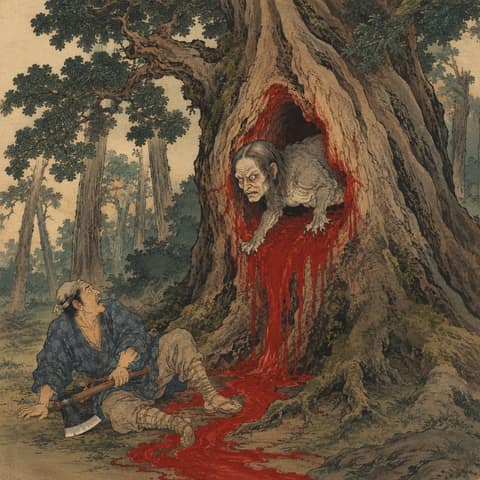
A tree spirit from Chinese lore, said to inhabit venerable old trees. In the Soushenji, it emerges from a camphor tree, bleeding and appearing like a dog with a human face. In Japan, Edo-period natural histories and yokai picture scrolls present it as a Chinese entity akin to kimyō or kodama—tree spirits. Linked to beliefs about echoes in the mountains, it has been discussed as an antecedent to the dog-shaped image of Yamabiko.

Hōsōshi

Hōsōshi

Epic

hō-sō-shi

Hōsōshi of the Courtly Tsuina Rite

Deities and divine beingsAn exorcistic official described in the Chinese Zhouli; the role reached Japan as part of the Great Nuo rite.

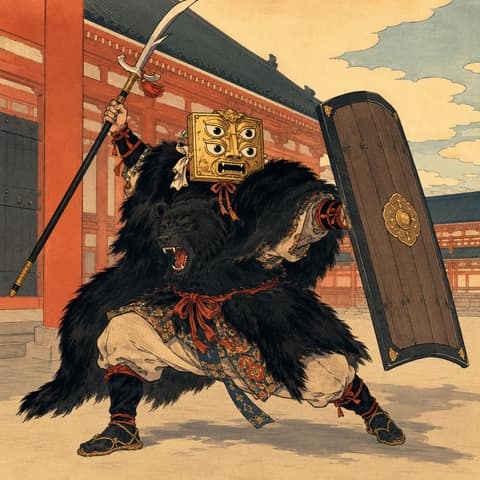
The Hōsōshi originated as the figure charged with driving away evil in China’s Great Nuo ceremony. In Japan, the Hōsōshi became the central performer in the court’s Ōna and tsuina rites, expelling spirits believed to cause epidemics. Early records describe a square, four-eyed mask symbolizing command of the four directions, a halberd in the right hand, a great shield in the left, and a bearskin costume. Accompanied by ritual attendants known as shinshi and nanin, the Hōsōshi processed through the imperial palace and drove pestilence beyond its gates. The ceremony eventually became part of the annual court calendar.

Hossumori, the Fly-Whisk Guardian

Hossumori, the Fly-Whisk Guardian

Rare

HOSS-soo-MOH-ree

Sekien Iconography Standard

Animated Objects & UndeadEdo period; derived from picture scrolls

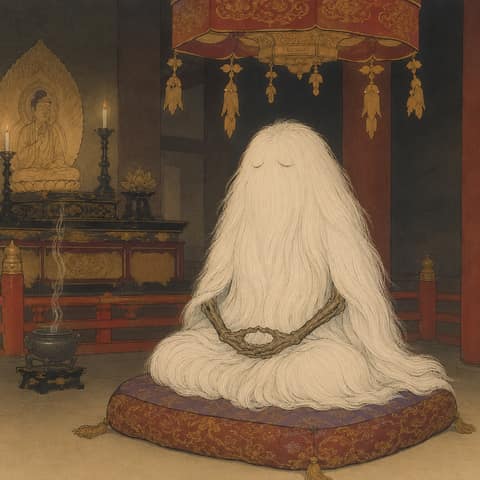
Hossumori is a tsukumogami—an artifact spirit—said to arise from a monk’s fly-whisk (hossu) used in Zen practice. In Toriyama Sekien’s Hyakki Tsurezure Bukuro, it is shown seated in full lotus beneath a canopy, absorbed in zazen. Sekien alludes to the Zen kōan of “a dog’s Buddha-nature,” suggesting that even a humble ritual tool can manifest Buddhahood. It embodies the idea of a long-used sacred implement gaining numinous presence and sitting in stillness to pursue enlightenment.

Hotei

Hotei

Legendary

ほてい

Incarnation of Maitreya, the Laughing Monk, Hotei

Divine Spirit / DeityYuelin Temple, Fenghua County, Mingzhou (now Fenghua District, Ningbo, Zhejiang, China) / Introduced via Zen Buddhism in the Kamakura period / Shrines and temples of the Seven Lucky Gods pilgrimage in Kanto and Kinki

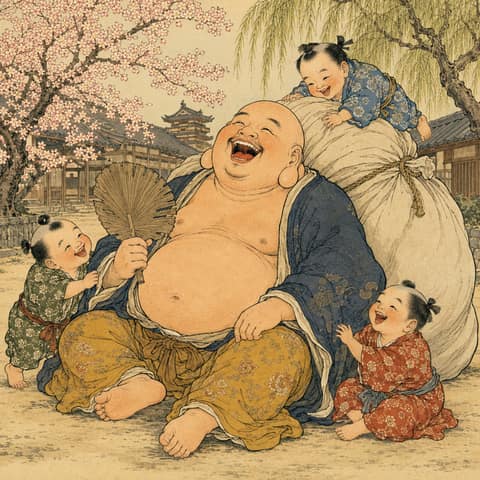
A deity originating from the actual Zen monk Qici (died 917) of the late Tang and Five Dynasties period. His standard iconography depicts him as a monk with a bare, bulging belly, carrying a large cloth sack (hotei) on his back, leaning on a staff, and laughing heartily with a flushed face. Because he reportedly chanted the deathbed poem, "Maitreya, the true Maitreya, present in billions of forms," he came to be regarded as an incarnation of Bodhisattva Maitreya, thereby holding a dual position as both a Buddhist disciple and a popular folk deity of fortune. He was introduced to Japan during the Kamakura period as a subject of Zen painting, established his place as one of the Seven Lucky Gods in the late Muromachi period, and garnered widespread popular belief by the Edo period as a god of laughter, marital harmony, fertility, and prosperous business. He is a rare type of deity of fortune whose plump figure and large sack symbolize the virtues of broad-mindedness, non-attachment, and giving.

Bone Woman

Bone Woman

Rare

HOH-neh-ON-nah

Bone Woman (after Sekien Toriyama)

Half-Human BeingsEdo period (print tradition)

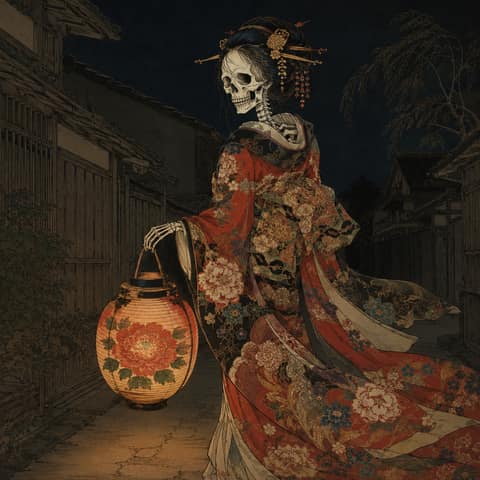
Bone Woman is a skeletal female yokai depicted by Toriyama Sekien in Konjaku Gazu Zoku Hyakki. In his notes, Sekien cites otogizōshi-style ghost tales in which a woman bearing a peony-patterned lantern visits her lover, drawing on the female specter from Asai Ryōi’s Otogibōko story “Botan Dōrō.” The image embodies a beauty who approaches a man but is in truth bare bones—a visualization of the uncanny where desire and death intersect.

Boze

Boze

Common

Boze

The Visiting Deity of Akusekijima

Gods & SpiritsKagoshima

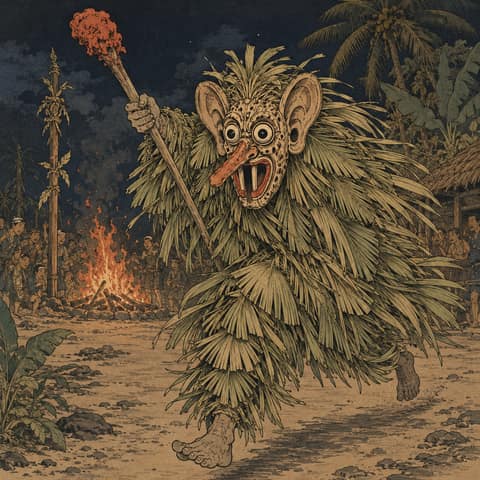
A visiting deity (*raihoshin*) passed down on Akusekijima in the Tokara Islands of Kagoshima Prefecture. Appearing on the final day of the Obon festival (July 16th on the lunar calendar), it is worshipped as a being that purges evil spirits and impurities while bringing good fortune to the people. In 2018, it was inscribed on the UNESCO Intangible Cultural Heritage list as one of the "Raihoshin: Ritual Visits of Deities in Masks and Costumes".

Boroboroton

Boroboroton

Rare

boh-roh-boh-roh-TOHN

Sekien Zufu Edition

Animated Objects & UndeadEdo period, Japan

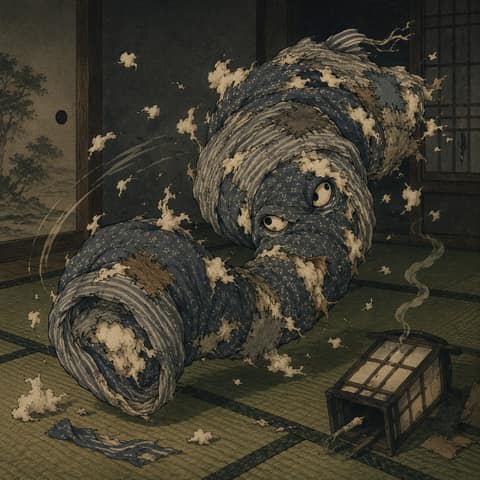
Boroboroton is a tsukumogami: an old, torn futon that gains a spirit after long years of use. It appears in Toriyama Sekien’s Edo-period Hyakki Tsurezurebukuro, where its name plays on boroboro (“tattered”) and possibly a term for mendicant monks. Lacking widespread oral lore, it is largely Sekien’s creation. At night the futon hops about and startles people, more prankster than menace.

Showing 73 - 81 of 81 yokai